Electronic cigarettes have been around long enough that most adults know they produce “vapor,” not smoke. But the details—what’s actually inside that aerosol—are still a mystery for many users and even for some retailers. And with disposable vapes now dominating the market, the question comes up more than ever: What exactly are we inhaling when a disposable vape turns e-liquid into an aerosol?
A lot of explanations online are either too technical or too vague. So, instead of diving into chemistry textbooks, this article walks through the composition of electronic cigarette aerosol in a way that’s useful for distributors, vape shop owners, and adult consumers who want a grounded, realistic answer.
What Electronic Cigarette Aerosol Actually Is
Let’s clear up one misconception immediately:
E-cigarette aerosol is not “steam” and not “smoke.” It is an aerosol—tiny liquid droplets suspended in the air, created when the device’s heating element evaporates e-liquid and then cools it again as you inhale.
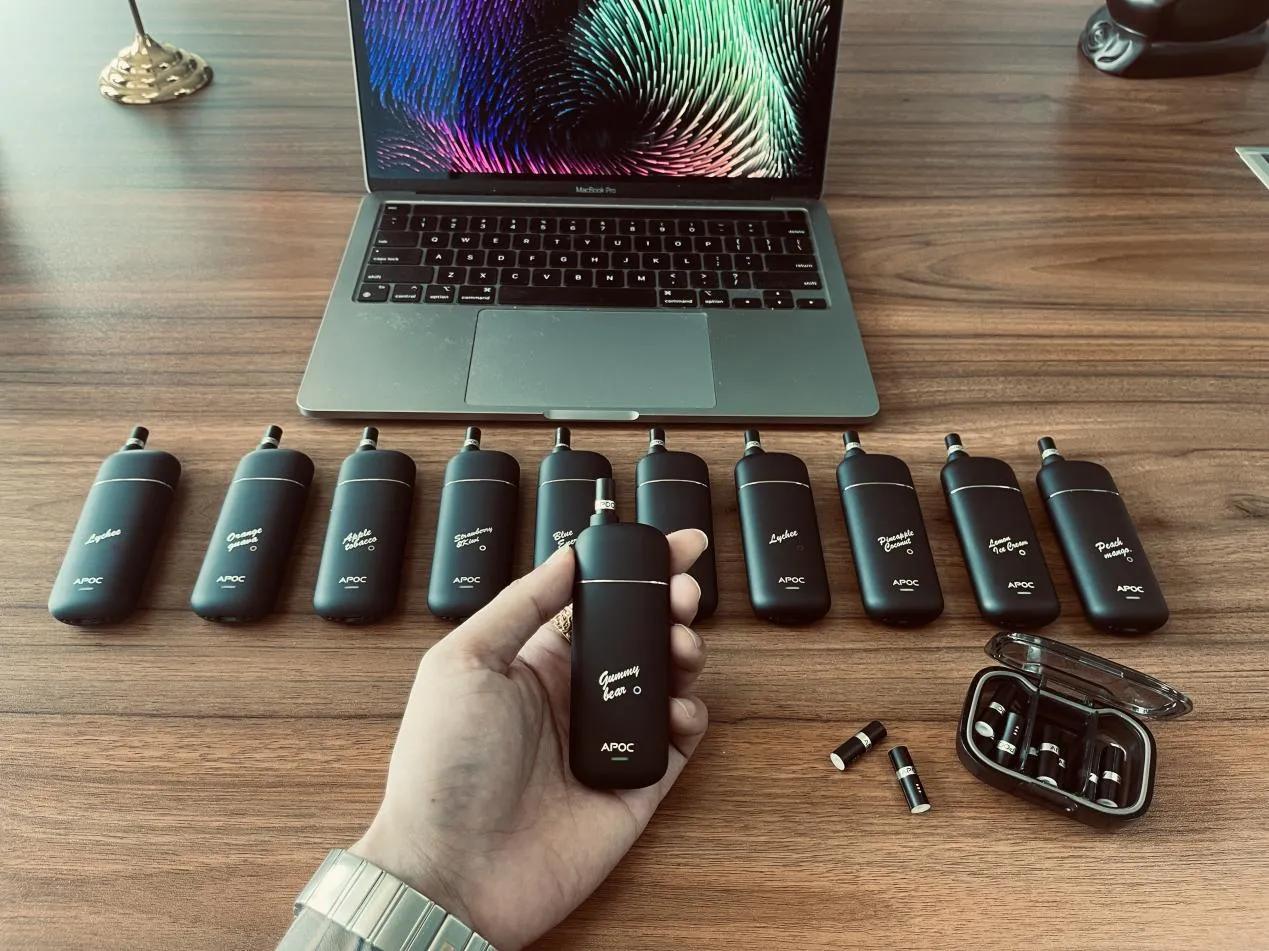
Disposable vapes follow the same principle as refillable devices, just simplified into a compact, sealed structure. Inside every disposable, regardless of size or puff count, there are three core components that eventually form the aerosol:
- Propylene glycol (PG)
- Vegetable glycerin (VG)
- Nicotine (optional depending on market)
- Food-grade flavorings
These ingredients interact with heat and airflow to produce the aerosol cloud we see. Nothing appears out of thin air—every visible puff begins with these base liquids.
Propylene Glycol (PG): The Carrying Agent
PG has been used in inhalation products for decades, long before vapes were invented. In aerosol form, PG helps deliver flavor and nicotine more efficiently because it carries volatile compounds extremely well.
In disposable vapes, PG:
- Creates a sharper, more defined throat hit
- Helps flavors feel crisp
- Thins the liquid for smooth wicking
Higher-PG liquids are common in small disposables, especially those designed for mouth-to-lung use. Mesh coils, now widely adopted, make PG behavior even more consistent because they heat evenly across the surface.
Vegetable Glycerin (VG): The Vapor Builder
VG is naturally thicker and sweeter than PG. It produces the dense clouds that most adult users associate with vaping.
In aerosol form, VG contributes to:
- Thick, smooth vapor
- Softer inhalation feel
- Slight natural sweetness
Disposable vapes typically use a PG/VG blend optimized for coil size and airflow. Manufacturers adjust ratios so the liquid wicks correctly through the material surrounding the heating coil, preventing dry hits.
Nicotine in Aerosol: How It Enters the Picture
There’s a lot of confusion around nicotine in aerosol, partly because people mix up nicotine strength, absorption, and “harshness.”
When heated, nicotine becomes part of the aerosol droplets—not a gas, not a burned compound, just dissolved within the liquid particles. Nicotine delivery depends heavily on:
- Coil temperature
- Particulate size
- Salt nicotine formulation
- Airflow design
Most modern disposables use nicotine salts because they stay smoother at higher strengths, allowing consistent aerosol formation even in compact devices.
Depending on market regulations, disposables may contain:
- 0 mg (nicotine-free)
- 10–20 mg (EU / UK limit)
- 30–50 mg (regions without restrictions)
But whatever the number, nicotine itself is simply part of the aerosol droplets—not free-floating.
Flavor Components: The Largest Variable in Aerosol Composition
Flavorings contribute enormous diversity to aerosol composition. They are food-grade compounds, many of which are used in beverages, confectionery, or even aroma therapy.
When incorporated into the aerosol, flavor molecules:
- Attach to PG and VG droplets
- Vaporize at different temperatures
- Affect smoothness and perceived intensity
This is why manufacturers spend so much R&D time on flavor stability. Some flavors hold their form better at high heat, while others require adjusted coil materials or airflow calibration.
Shenzhen Vapehome Technology CO.,Ltd invests heavily in this part of product development. Their internal team works on flavor consistency, coil compatibility, and vapor density to avoid issues like “flavor fade” or burnt notes that can affect the aerosol experience.
How Disposable Vapes Turn Liquid Into Aerosol
While every device looks a little different on the outside, the internal process is surprisingly consistent across the industry. Here’s what happens with each puff:
- Airflow sensor activates the battery
- Heating coil warms e-liquid absorbed in the wick
- Liquid evaporates into a fine aerosol
- Aerosol travels through chimney and into the mouthpiece
- Droplets cool slightly during inhalation
Mesh coils—common in today’s disposables—produce tighter particle size distribution, which affects how smoothly the aerosol feels and how visible the cloud becomes.
What Aerosol Does Not Contain
A few misconceptions are worth clearing up:
- There is no combustion, so no smoke
- No ash, tar, or carbonized byproducts
- No solid particles like in cigarette smoke
- The aerosol dissipates much faster than smoke because droplets evaporate in seconds
While aerosol still contains chemicals (as any vaporized liquid does), it belongs chemically to a different category from burnt tobacco.
Why Understanding Aerosol Composition Matters for Retailers
Retailers who understand aerosol composition often find it easier to guide adult customers. When people know:
- PG creates throat hit
- VG creates clouds
- Nicotine is dissolved inside droplets
- Flavoring determines smoothness
…they make more confident choices. It also reduces returns, misunderstandings, and hesitation among new adult users trying disposables for the first time.
Shenzhen Vapehome Technology CO.,Ltd — A Look Behind the Products
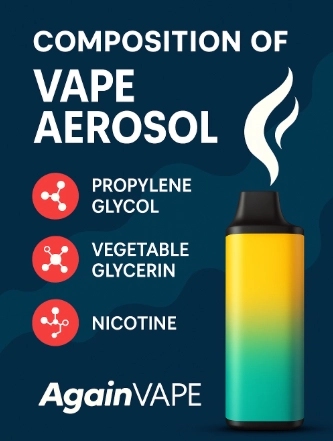
Shenzhen Vapehome Technology CO.,Ltd has been manufacturing disposable vapes and pod systems since 2013. The company combines in-house engineering, flavor development, strict QC, and global compliance (CE, RoHS, FCC, UK MHRA, TPD, KC, SIRIM) to support distributors worldwide.
They developed again® and APOC® in-house, with several products exceeding 10 million units sold. But much of their business still comes from OEM/ODM partnerships, where they design and manufacture devices under private-label agreements and maintain strict confidentiality for brand owners.
Their advantage is not just capacity but consistency—flavor, vapor density, coil stability, and aerosol smoothness across large-scale production.
Conclusion
Electronic cigarette aerosol may look complicated on paper, but at its core, it’s simply a mixture of PG, VG, nicotine (when present), and food-grade flavor compounds—heated and condensed into tiny droplets. Once you understand how each ingredient behaves, the entire process becomes far easier to explain.
For retailers, this knowledge translates into better guidance for customers. For adult users, it removes much of the mystery behind what they’re inhaling. And for manufacturers like Shenzhen Vapehome Technology CO.,Ltd, aerosol composition isn’t just chemistry—it’s the foundation of product reliability, flavor stability, and long-term brand trust.
FAQs About Electronic Cigarette Aerosol Composition
What ingredients actually form the aerosol in disposable vapes?
Primarily PG, VG, nicotine (if included), and flavoring compounds. When heated, these ingredients turn into tiny liquid droplets that make up the aerosol.
Does the aerosol contain smoke or tar?
No. There is no burning in a disposable vape, so the aerosol doesn’t contain tar or ash. It behaves differently from cigarette smoke and dissipates quickly.
Is nicotine in aerosol a gas or vapor?
Neither. Nicotine mixes into the PG/VG droplets and becomes part of the aerosol cloud—not a standalone gas.
Do different coil types change aerosol composition?
Yes. Mesh coils heat more evenly and create finer aerosol particles, leading to smoother flavor and more stable vapor.
Why does flavor taste different across devices with the same nicotine strength?
Flavor compounds vaporize at different temperatures. Coil shape, heat output, and airflow affect how each flavor comes through.