You need a quotation, so you send over the packaging brief. Then you notice the second tab: distributor names, expected orders and the launch schedule. That is an easy disclosure to make during an ordinary OEM enquiry. The supplier needs something concrete, while the brand still has no reason to circulate every file it owns. The practical question is what the next decision actually requires.
For a private-label disposable vape, that might initially mean the proposed packaging changes and an approximate order quantity. The detailed customer forecast serves a different purpose. Keeping those documents separate gives the factory something it can quote against while the brand retains information that is irrelevant to the quotation.
Which details belong in the first brief?
Think of the brief as an answer to the factory’s immediate questions. Is the buyer discussing an existing model, new packaging, or a more extensive design project? A description and a review image may answer that. They will not replace production files later, but there is little reason to send an editable design merely to establish whether a conversation is worth pursuing.
The same reasoning applies to commercial numbers. An order estimate gives the supplier a basis for discussion. The name of the distributor behind that estimate may add nothing useful at this stage. There may be a good reason to share more later. Ask for that reason, then decide who needs the extra detail. Forwarding the spreadsheet to everyone on the email isn’t the only way to answer a supplier’s question.
What does the confidentiality agreement leave undecided?
Don’t wait until you’ve sent the unpublished artwork to bring up the NDA. It is also worth reading for what it actually covers. Keeping information confidential does not, by itself, answer who owns a device design or whether another buyer may order the underlying model.
A logo and a device are different contributions
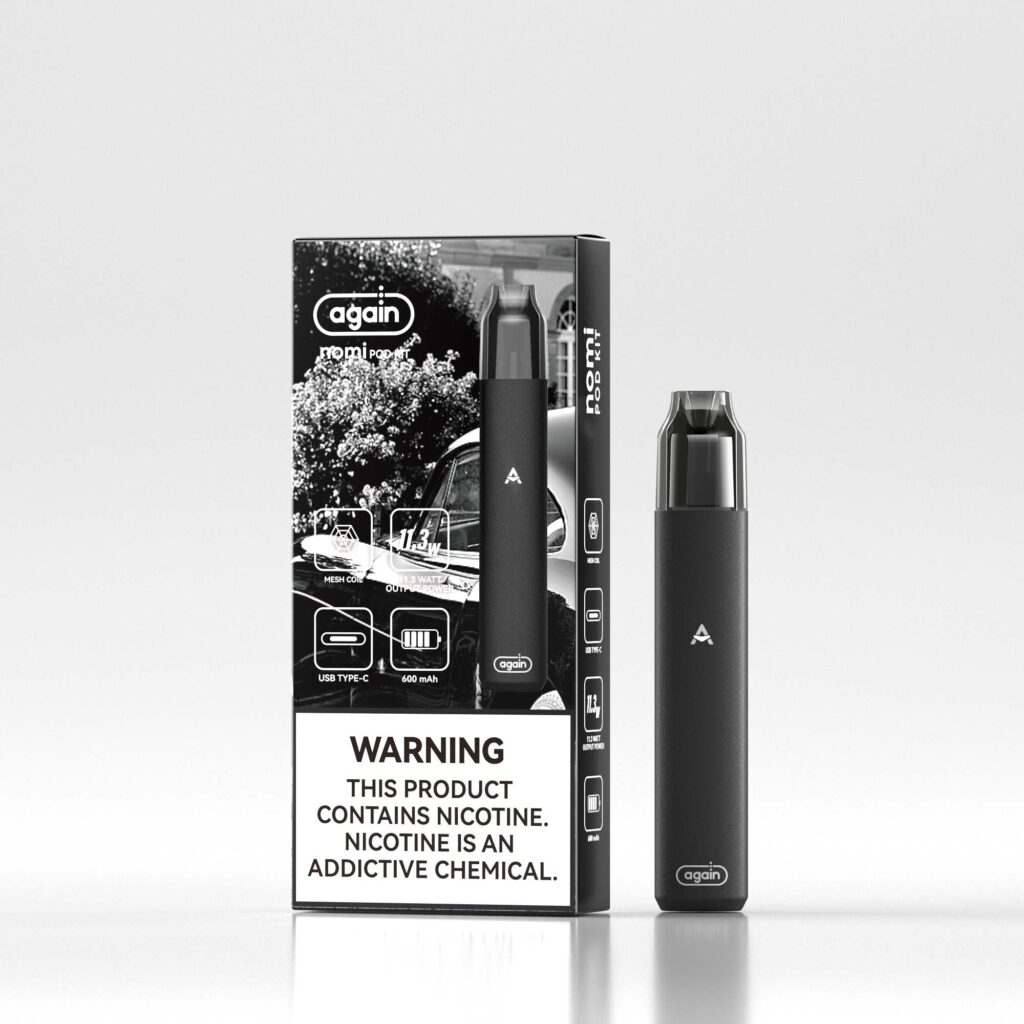
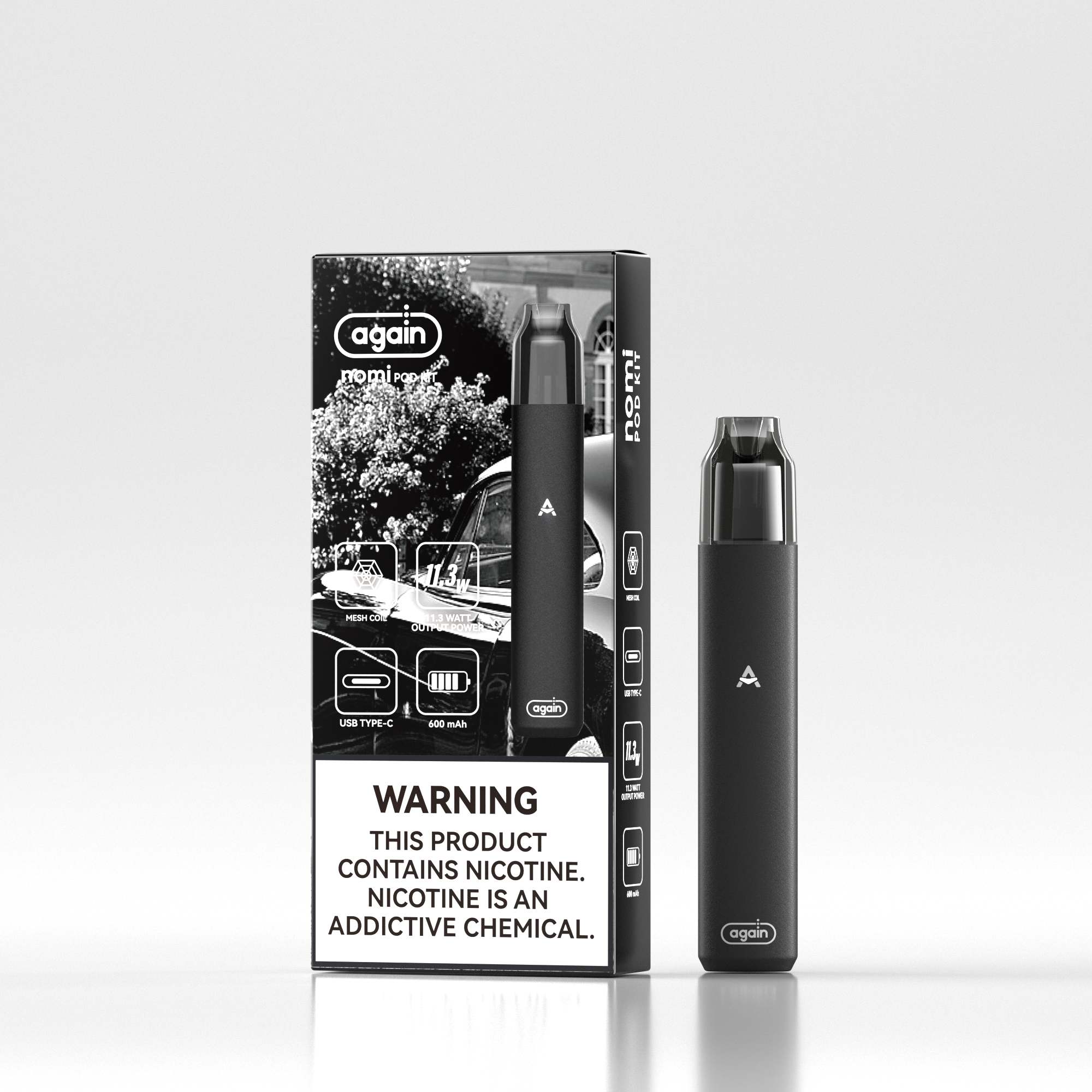
Consider a discussion involving the again NOMI refillable pod kit. It is an existing product; a buyer’s proposal to add branding does not establish ownership of the device. The buyer may supply the logo while the factory supplies the platform. If new artwork or design work is commissioned, its ownership and permitted uses need to be addressed as well.
There may be no disagreement once the question is asked. The difficulty is leaving it unasked until someone wants to reuse the work. Ask about the awkward possibilities too. Can the supplier show an unused proposal to another buyer? Who can use work you paid to commission? If you want exclusivity, say what it should cover. Have a qualified adviser check the actual terms for the companies and markets involved.
Could someone identify the approved artwork without asking you?
Open a folder containing two box designs. The logo is approved on one; the other has a colour change that sales wanted to explore. Both filenames contain “final.” “Print the latest one” won’t help someone who wasn’t in those conversations. Put a date and version on the file, and keep the approval with it. The printer shouldn’t have to work out which email counts.
A file register need not be elaborate. A few columns will do: the file, its recipient, why it was sent and whether it is still current. Add the approval reference there. A colleague opening the folder next week needs to find that answer without calling you. The chat history can remain available without becoming the only way to reconstruct a decision.
There is a related access question at handover. Think about the freelance designer whose assignment has ended. Their access to the working folder may need to end too. Check it when the work finishes, while you can still remember what access was given. One named contact on each side gives people somewhere to take these questions.
What happens when a sample leaves the office?
A physical sample can reveal just as much as a drawing, especially if it appears in a photograph before launch. The recipient may see no harm in showing it to a distributor. The brand may have intended it solely for a packaging check. Neither intention is obvious from the parcel, so permission to display, photograph or pass it on needs a conversation.
Among different disposable vape designs, the packaging work may bring an outside printer into the discussion. The printer can receive the artwork it needs without being invited into every project folder. Ask who will send it and how the agreed restrictions apply to the printer. Note the handoff when it happens.
Cancellation doesn’t make the files vanish. The sample might come back while its photographs stay on someone’s phone or in a shared drive. The closing arrangements need to cover those too, allowing for any justified record retention under the agreement. Get the closing decision in writing; you may need to look it up if talks resume.
What if an attachment goes to the wrong person?
Open the message and establish exactly what went out. Was it an attachment or a folder link? Can access to the link still be removed? Ask the recipient not to pass the material on and tell the project contact. Keep the message history rather than clearing away the evidence of the mistake.
An unpublished customer list and a draft sent to an approved designer present different questions. The response should reflect what was exposed. A reassuring guess is not a response plan. The record of recipients and versions is particularly valuable here.
Before a file moves, a buyer can ask one plain question: what will the recipient do with this copy? If nobody can name a task, the transfer can probably wait.
An OEM discussion with Vapehome
Shenzhen Vapehome Technology Co., Ltd. offers vape development, manufacturing and OEM and ODM cooperation. Its project materials include confidentiality agreements for OEM customers. For an enquiry, start with your product brief and customization questions. Ask the team which files it needs for a proposal before sending the sensitive artwork. The recipients, permitted uses and written terms can then be confirmed for that project.
Conclusion
An OEM project needs information to move forward. You don’t need to hand over every file at the first enquiry. Give each recipient what their task needs, record which version went out and make sure the agreement covers that use. Keep doing this when the project changes or ends.
FAQs
Must the first enquiry include editable artwork?
Ask what is needed to assess the proposal. A description or review image may be sufficient before detailed production work is agreed.
Does an NDA include exclusivity?
Only if the agreement says so. Ask about exclusivity directly, including its scope; a promise to keep files confidential doesn’t answer that question.
Do sample photographs need to be covered?
Yes, discuss photography and onward sharing alongside the sample itself, particularly where either could disclose an unreleased design.